Remhu: A Clean Sans Serif Font for Consistent Branding
Running a small business means wearing many hats. You are the CEO, the marketing manager, the customer support agent, and often the graphic designer too. In this chaotic environment, consistency is not just an aesthetic choice; it is a survival strategy. When your brand looks cohesive across every touchpoint—from your Instagram bio to the sticker on your shipping box—customers begin to trust you. One of the most effective ways to achieve this cohesion without hiring an expensive agency is by choosing the right typeface. For many entrepreneurs, Remhu has become a go-to solution for creating a clean, modern, and professional look.
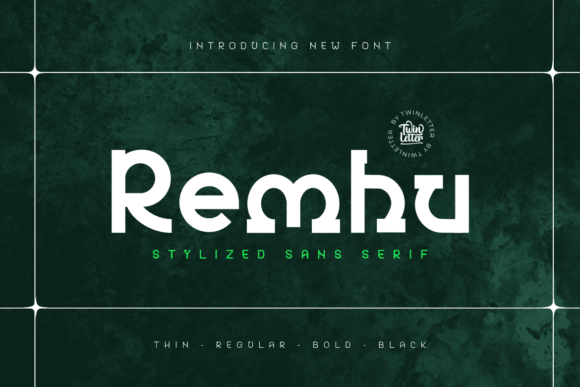
Remhu is a distinctive and neat sans serif font that bridges the gap between playful creativity and corporate reliability. It is designed to be versatile enough to match an incredibly large set of projects, allowing you to add it to your creative ideas and notice how they stand out. Whether you are selling handmade candles, launching a coaching service, or running a boutique clothing line, Remhu offers the visual stability needed to make your brand feel established and trustworthy.
Why Sans Serif Fonts Matter for Small Business Identity
In the world of digital and print design, the choice between a serif and a sans serif font can significantly impact how your message is received. Sans serif fonts, like Remhu, are characterized by their clean lines and lack of decorative strokes at the ends of characters. This simplicity translates directly to readability, especially in today’s mobile-first economy. When a potential customer scrolls through their phone on a subway or quickly glances at a product label in a store, clarity is king.
For small business owners, using a premium font like Remhu signals attention to detail. It suggests that you care about the quality of your presentation as much as the quality of your product. A well-chosen sans serif font helps eliminate visual noise, allowing your core message—whether it is a sale announcement, a brand mission statement, or a product name—to take center stage. By adopting a consistent typeface family, you create a visual anchor that makes your brand instantly recognizable, even when seen in isolation or at a very small size.
Real-World Applications Across Your Brand Touchpoints
The true power of Remhu lies in its adaptability. Because it is both neat and distinctive, it can seamlessly integrate into various aspects of your business operations. Here is how you can practically apply this typeface to enhance your brand identity:
- Logo Design and Branding: Remhu works exceptionally well as a primary font for logos. Its clean structure ensures that your logo remains legible whether it is embossed on a business card or scaled down to fit as a favicon on a website. The neutral yet stylish nature of the letters allows it to pair well with icons or illustrative elements without competing for attention.
- Packaging and Product Labels: If you sell physical goods, your packaging is your silent salesperson. Remhu’s neatness makes it ideal for displaying essential information such as ingredients, usage instructions, and care labels. On cosmetic jars, food containers, or apparel tags, this font maintains a high-end, minimalist aesthetic that appeals to modern consumers who value transparency and elegance.
- Social Media Graphics: In the crowded feeds of Instagram and Pinterest, bold and clear typography stops the scroll. Use Remhu for headlines in your promotional posts, event announcements, or quote graphics. Its strong presence ensures that your text is readable even on smaller mobile screens, increasing the likelihood that users will engage with your content.
- Digital Marketing and Web Design: For your website banners, email newsletters, and landing pages, Remhu provides a modern foundation. It pairs beautifully with ample white space, creating a sense of openness and professionalism. When used for call-to-action buttons or navigation menus, its clarity guides users smoothly through your sales funnel.
- Printed Collateral: From flyers and brochures to thank-you cards included in orders, Remhu adds a touch of sophistication to printed materials. It is particularly effective for bullet points, headers, and subheadings, helping to organize information in a way that is easy for customers to digest.
Font Pairing Strategies for a Cohesive Look
While Remhu is powerful on its own, combining it with other typefaces can elevate your design further. The key to successful font pairing is balance. Since Remhu is a sans serif font, it pairs naturally with contrasting styles to create visual interest without sacrificing readability.
One effective strategy is to pair Remhu with a classic serif font. The contrast between the modern, geometric lines of Remhu and the traditional elegance of a serif creates a sophisticated dynamic. This combination works wonderfully for businesses that want to appear both contemporary and timeless, such as a law firm, a luxury skincare brand, or a high-end café. Use Remhu for headings and UI elements, and let the serif font handle body text to ensure comfort during long reads.
Alternatively, you might consider pairing Remhu with a script font or a handwritten font for accent purposes. This approach adds a personal, human touch to your branding. For example, a bakery owner could use Remhu for the main menu items and prices, while using a handwritten script for special daily notes or the signature on a thank-you card. This mix of structured and organic elements reflects a brand that is professional yet approachable.
Readability in Small Formats
As a business owner, you must consider how your font performs in real-world constraints. Remhu shines in small formats due to its open letterforms and consistent stroke weight. Whether it is printed on a tiny jewelry tag or displayed as a thumbnail in a social media ad, the letters remain distinct. This legibility reduces cognitive load for your customers, making it easier for them to process information quickly. Always test your chosen font at the actual sizes you intend to use it. If text becomes blurry or hard to distinguish at 10 pixels, it may not be suitable for all your digital assets.
Practical Steps Before Implementation
Before fully committing to Remhu for your entire brand identity, take some time to test it. Create mockups of your most critical materials—a business card, an Instagram post, and a product label—and review them side by side. Does the font convey the mood you want? Is it too rigid or too casual for your industry? Experiment with different weights and sizes to see how the font behaves under pressure.
Furthermore, always check the commercial font licensing terms before using Remhu on products, packaging, templates, merchandise, client work, or digital downloads. Understanding the legal boundaries of your creative font usage protects your business from potential liabilities. Most modern font foundries offer clear guidelines that allow for broad commercial use, but verifying these details ensures peace of mind as you scale your operations.
By integrating Remhu into your design workflow, you are investing in a tool that supports growth, clarity, and professionalism. It is more than just a collection of letters; it is a fundamental component of your brand identity that helps tell your story effectively to the world.